

In today’s digital marketplace, providing prompt, accurate, and helpful responses to customer inquiries is no longer just a nice-to-have feature; it is a fundamental requirement for building trust and maintaining a competitive edge. For small online-business operators, balancing the need for personalized customer service with the constraints of limited time and resources often leads to exploring automation. The software landscape is crowded with solutions ranging from simple auto-responders to complex generative systems. Choosing the wrong platform can alienate your audience, create data liabilities, and waste precious capital. To navigate this successfully, operators must systematically evaluate customer-conversation software and managed services based on concrete business needs rather than marketing hype.
Approaching this procurement process requires a clear-eyed assessment of what you actually need the software to do, how it integrates with your existing workflows, and the total cost of running it effectively. Whether upgrading from a shared inbox or implementing your first conversational interface, a structured evaluation framework prevents costly missteps. This guide walks you through the critical phases of evaluation, from defining the core job of the software to running a rigorous pilot program.
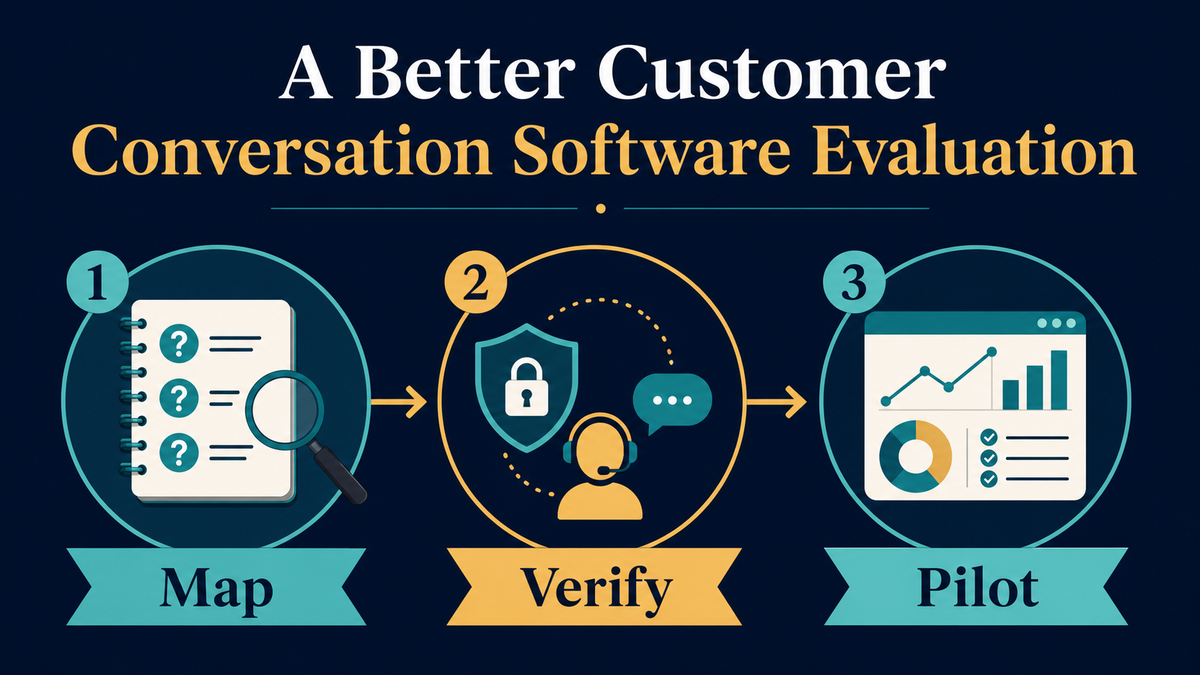
Understanding the Job of Customer-Conversation Software
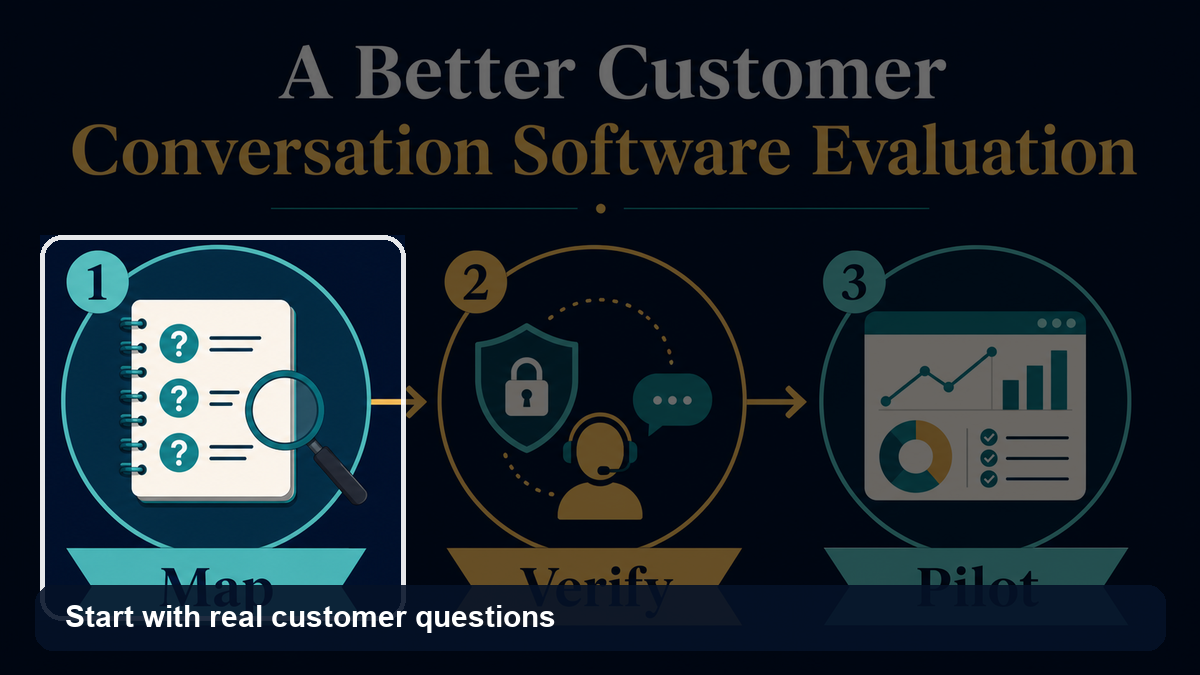
Before looking at specific vendors, clearly define the “job” you are hiring the software to do. Are you primarily trying to answer repetitive shipping questions, qualify leads before routing them to a human, or provide 24/7 basic support? If the goal is simply to reduce volume to your inbox, you might only need a robust self-serve knowledge base paired with a routing tool. However, if your goal is to actively guide users through a complex purchasing decision, you might require a more sophisticated conversational engine.
When you sit down to evaluate chatbot services for a business, start by auditing your current interactions. Categorize inbound messages by type, frequency, and time required to resolve them. Identify repetitive queries that do not require human empathy or complex problem-solving. These are prime candidates for automation. By explicitly defining the scope of automation, you set realistic expectations and avoid overpaying for unnecessary features.
Furthermore, consider the broader context of your business operations. For instance, how online operators should think about buying an existing business often involves inheriting legacy systems and customer expectations. If integrating new conversational software into an acquired business, tread carefully to maintain continuity and trust with the existing customer base.
Fix Page Information Gaps Before Automating the Answer
Repeated customer questions can reveal missing information on a landing page. Before writing an automated response, check whether the page clearly explains the offer, its limits and the next step. Group questions by the page that generated them, then correct confusing headings, buried details and unclear navigation.
When comparing outside help, review the scope of an on-page SEO review and distinguish page-level work from installing a chatbot. These address different problems: the page should communicate the offer clearly, while the conversation system handles questions and exceptions that remain. Track both customer questions and completed actions after changes instead of assuming that either service guarantees more sales.
Mapping Channels, Handoffs, and Customer Journeys
Modern customers expect to interact with businesses across multiple channels—website widgets, email, SMS, and various social media platforms. Your evaluation must consider whether the software can seamlessly manage conversations across the specific channels your customers actually use. A platform that excels at web chat but fails to integrate with your primary social media channel creates fragmented customer experiences and operational headaches.
Equally critical is the handoff mechanism. No automated system can handle every query. There will always be complex issues or high-value sales conversations requiring human intervention. The software must gracefully route the conversation to a human operator, complete with the full context of the interaction thus far. A clunky handoff—where the customer repeats information—is a fast track to frustration. As you map workflows, review resources on how to use messenger automation without annoying your audience to ensure your routing logic prioritizes user experience.
Reviewing Data Practices, Privacy, and Security
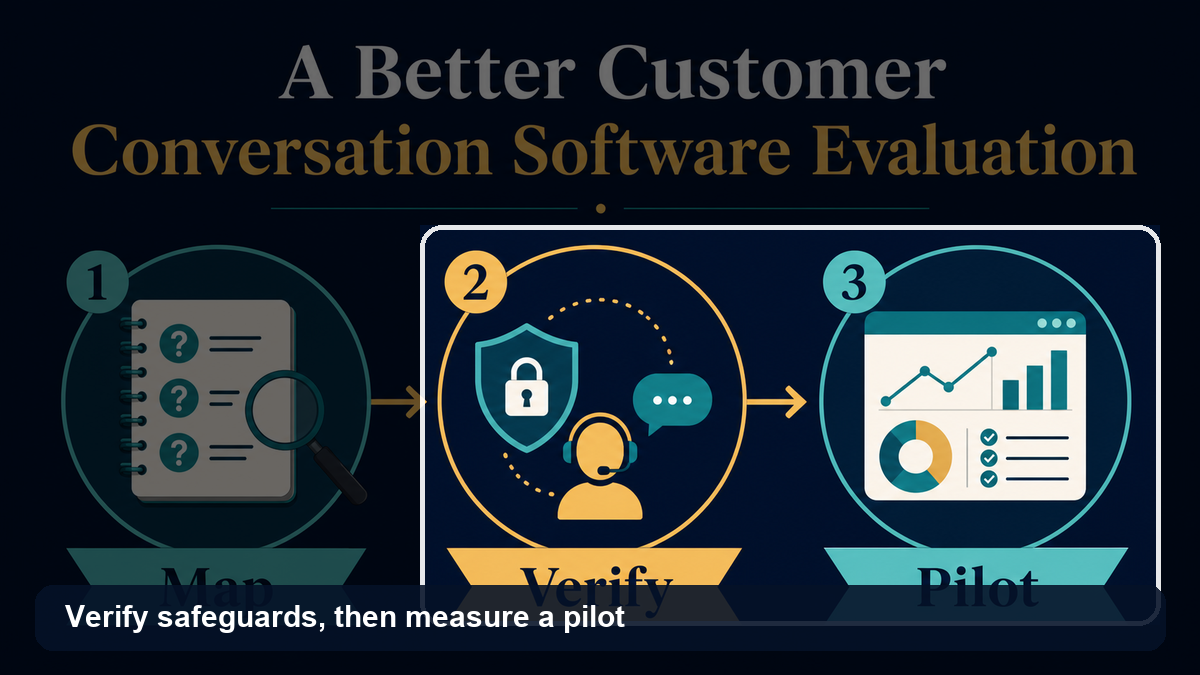
Customer-conversation software inevitably processes sensitive data, including contact details and potentially personally identifiable information (PII). Ensure any vendor you choose handles this data securely and legally. You must scrutinize data retention policies, encryption standards, and compliance with relevant privacy regulations.
The Federal Trade Commission’s business guidance emphasizes practical data security and data minimization—only collecting and retaining the data strictly necessary for your business purpose. When evaluating vendors, ask explicit questions about where data is stored, who has access to it, and how it is used to train models. Do not assume a vendor’s default settings align with your risk tolerance or regulatory obligations.
Additionally, if the software utilizes artificial intelligence, familiarize yourself with the NIST AI Risk Management Framework. This framework provides guidelines to manage risks associated with AI systems, focusing on characteristics such as accuracy, reliability, safety, security, and privacy. Asking how a vendor applies those practices helps expose gaps before a purchase.
Integration, Portability, and Ecosystem Fit
A conversational tool needs to communicate with your existing technology stack. At a minimum, it should integrate smoothly with your Customer Relationship Management (CRM) system, e-commerce platform, and helpdesk software. Without these integrations, your data remains siloed, and the software cannot provide contextually aware responses.
During evaluation, verify the depth and reliability of these integrations. Does the software offer native, one-click integrations, or does it require complex custom API work? Furthermore, consider data portability. If you switch vendors in the future, how difficult will it be to export your conversation history, routing rules, and customer profiles? Vendor lock-in is a significant hidden cost. Ensure you retain ownership of your data.
Calculating Total Operating Cost (TOC)
The sticker price of the software is rarely the total cost of ownership. Small businesses frequently underestimate the resources required to implement, maintain, and optimize these systems. When calculating the total operating cost, factor in both direct and indirect expenses.
Direct costs include monthly subscription fees, usage-based charges (e.g., per message), and premium integration costs. Indirect costs are often more substantial. They include time spent configuring the system, writing conversational scripts, training staff, and ongoing monitoring to ensure correct performance. Automation requires continuous refinement based on user feedback and changing needs.
The Small Business Administration publishes planning resources for small-business operators. Apply the same discipline to technology spending: weigh the comprehensive TCO against realistic estimates of time saved, support costs reduced, and potential revenue generated through faster response times.
Establishing Pilot Acceptance Criteria
Never roll out a new conversational system to your entire customer base at once. Always conduct a tightly controlled pilot program first. A pilot allows you to test the software in a real-world environment, identify unforeseen issues, and gather user feedback without risking widespread disruption.
Before launching the pilot, define clear, measurable acceptance criteria. What specific metrics indicate the pilot is successful? These criteria should tie directly to the core “job” defined earlier. Avoid vague goals like “improve customer satisfaction.” Use concrete metrics instead.
Recommended Pilot Checklist
- Define the Scope: Select a specific subset of users, a single channel, or a narrow category of inquiries for the pilot.
- Establish Baselines: Document current metrics for the pilot scope (e.g., average response time, resolution rate).
- Set Target Metrics: Define the exact numbers the software must achieve to pass (e.g., handle 40% of tier-1 inquiries without human intervention).
- Monitor Escalations: Track every conversation handed off to a human. Analyze why it occurred and if the process was smooth.
- Survey Users: Gather direct feedback from customers interacting with the software during the pilot. Ask about accuracy and helpfulness.
- Review Edge Cases: Deliberately test the system with unexpected inputs or complex queries to see how it responds.
- Assess Team Impact: Gather feedback from your human support team regarding the software’s impact on their workflow.
Vendor Comparison and Evaluation Framework
When comparing different vendors, it is helpful to use a structured evaluation matrix. This ensures you judge each option against the same criteria and prevents being swayed by flashy features. Below is a foundational framework you can adapt to your specific needs.
| Evaluation Criteria | Vendor A | Vendor B | Vendor C |
|---|---|---|---|
| Core Functionality (Routing, Auto-responses, Knowledge Base integration) | |||
| Channel Support (Web, Email, SMS, Social) | |||
| Integration Depth (CRM, E-commerce, Helpdesk) | |||
| Data Security & Privacy Compliance (FTC guidelines, NIST alignment) | |||
| Handoff Mechanism Quality (Context preservation, Routing rules) | |||
| Total Operating Cost (Subscription, Usage, Setup, Maintenance) | |||
| Data Portability (Ease of export, Data ownership) |
Evaluating customer-conversation software is a strategic exercise going beyond comparing feature lists. By thoroughly understanding operational requirements, meticulously mapping the customer journey, rigorously assessing security practices, and executing a disciplined pilot program, small business operators can select a solution that genuinely enhances their service capabilities without compromising their budget.
Frequently Asked Questions
How do I know if my business is ready for automated conversation software?
Your business may be ready if you are consistently receiving a high volume of repetitive questions that take time away from more complex tasks, or if you are struggling to maintain acceptable response times during peak hours or off-hours.
Can I use conversational software to replace my human support team?
No, conversational software should augment, not replace, your human team. Its primary value is handling routine inquiries and routing complex issues to human agents who can provide the necessary empathy and critical thinking.
What is the most important feature to look for in these platforms?
While needs vary, the ability to execute a seamless, context-rich handoff to a human agent is arguably the most critical feature. A poor handoff experience is a primary driver of customer dissatisfaction with automated systems.
How can I ensure the software vendor handles my customer data securely?
You should request and review their data security policies, ask about their encryption protocols, and verify their compliance with recognized frameworks like those provided by the NIST and guidelines from the FTC.
Is it difficult to switch to a different software provider later?
It can be, which is why data portability is a crucial evaluation criterion. Before committing, you must understand exactly how you can export your historical conversation data, routing rules, and customer profiles if you choose to leave.



0 Comments